
Google has transformed search with generative AI overviews – concise answers to queries drawn from multiple sources. These AI Overviews sit above the traditional ten blue links, giving users quick answers and links to learn more. To stay visible, websites must adapt: How to Rank in AI Overviews? We’ll explain how AI Overviews work and share proven strategies to optimize your content for AI-driven search. You’ll learn how to structure answers, use Schema markup, leverage AI tools, and follow fundamental SEO practices so your pages are chosen in those AI answer boxes.
What Are Google’s AI Overviews?
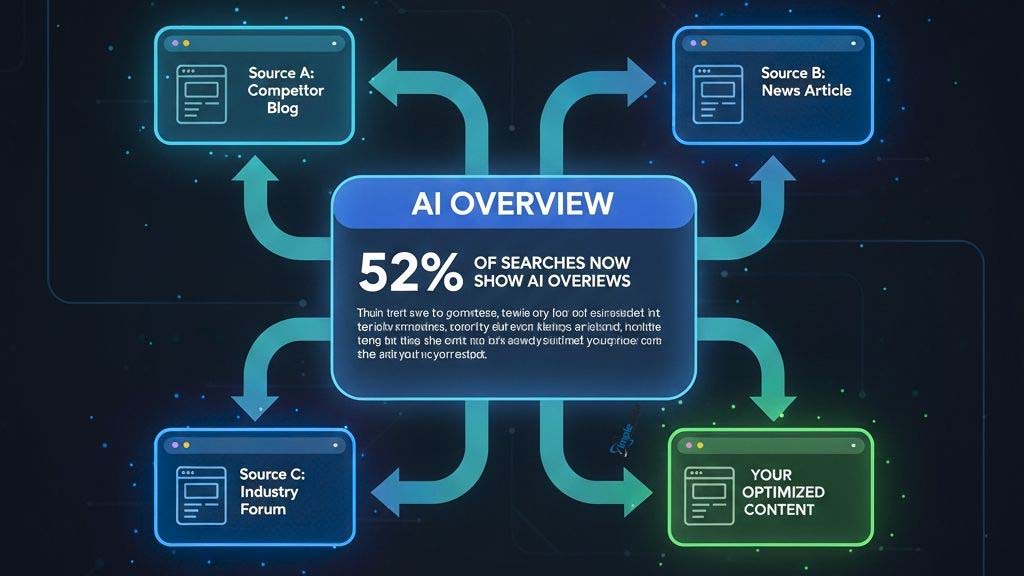
Google’s AI Overviews (also called AI answers or AI summaries) are generative-response boxes at the top of search results. They use Google’s Gemini models to synthesize content from several pages and present a concise answer. For example, in a search on “what is a page title,” Google’s AI Overview might show a short definition compiled from top-ranking pages. These Overviews typically include 175–200 words, an image or two, and 6–10 source links.
Unlike traditional featured snippets, AI Overviews may cover complex questions or multi-step instructions. They often provide the gist of a topic plus links for “Learn more.” As Exposure Ninja explains, an AI Overview consists of three parts: the AI-generated answer, citations to websites, and dropdown links that expand on each point.
Google’s own testing showed that people value these Overviews: in one Search Labs experiment, billions of AI Overviews were viewed, and users reported being more satisfied with search results. Google expects AI Overviews to roll out to hundreds of millions of U.S. users (and over a billion globally by year-end).
The key takeaway: AI Overviews combine multiple sources into one answer. To appear there, your content must be clear, authoritative, and directly answer user questions. It’s no longer enough to just rank high; you have to be the right high-quality answer for a query.
Why AI Overviews Matter for SEO
AI Overviews are now everywhere on Google. Recent studies show they appear in roughly 50% or more of searches across all devices. Even on desktop, about 19% of queries trigger an AI Overview. E-commerce and how-to searches see especially heavy AI presence. This means a large share of traffic now comes through AI-driven formats.
The impact on clicks is significant. Implevista found that by early 2025, AI Overviews showed up in 16% of US desktop searches, contributing to a 34.5% drop in click-through rates for top-ranking pages. Single Grain reported similar declines (position 2 saw a 39% CTR drop). In other words, if users get their answers directly in the AI box, they often don’t click down to your site.
However, Google claims AI Overviews send more engaged traffic. Google’s own reports note that AI Overviews include more diverse sources and links, and that users who click through spend more time on pages. Officially, Google promises to “focus on sending valuable traffic to publishers” even with AI answers. Realistically, sites that ignore AI Overviews risk losing visibility. For sustained traffic, optimizing for AI search is now essential.
In summary, AI Overviews dominate results for many queries. To maintain traffic, businesses must adopt an AI search optimization strategy. This means understanding how Overviews work and aligning content so Google’s AI chooses you as a source. The following sections explain the core principles and tactics.

AI Overview Ranking Strategy: Key Principles
To rank in AI Overviews, focus on answering user needs first. SEO experts note the top factors are:
- Directly match the query: Write content that closely matches the user’s question or query. If the query is “best SEO strategy for 2026”, your content should address that exact phrase.
- Clarity and conciseness: Provide a clear answer immediately. Studies suggest writing the key point up front (the “inverted pyramid” style) so the AI can extract it easily. Bullet points or numbered steps help too. Microsoft’s guidance emphasises breaking details into bulleted lists or Q&A formats, which AI can lift word-for-word into answers.
- Readable, human-friendly language: Keep paragraphs short and use simple language. A conversational, question-and-answer tone is ideal for AI queries. Avoid jargon and fluff. Remember, AI search users phrase long, natural questions, so mirror that in your writing. For example, include headings like “How to [perform task]?” and then answer them clearly.
- Structured formatting: Use plenty of subheadings, lists, tables, and FAQ sections. These structures signal to AI which sentences are complete ideas. For example, format a section as a question (H3 heading) and immediately answer it in 1–3 sentences. Exposure Ninja confirms that Q&A pairs and bulleted lists rank well for AI Overviews.
- E-E-A-T (Expertise/Authority/Trust): AI algorithms favor authoritative content. Google explicitly advises focusing on unique, expert-driven content. Show real expertise: include author bios, cite data or case studies, and link to reputable sources. Quality backlinks and an established brand signal authority. In short, content must demonstrate expertise and trustworthiness for AI to use it.
By following these core rules, your content becomes more likely to be selected by Google’s AI as a source answer. The next sections break down specific tactics under this strategy.
How to Optimize Website Content to Rank in AI Overview Results
This step-by-step section details how to optimize your content for AI search:
- Answer the Question First: Always begin by clearly addressing the user’s query. For instance, if your article is “How to Rank in AI Overviews,” the first sentence should directly state the main recommendation. This gives both users and AI an immediate signal. The Exposure Ninja guide notes that “getting to the point quickly” is key to winning AI answers.
- Use Clear Headings and HTML Structure: Markup your key points with HTML headings (H2, H3) that reflect likely user questions. E.g., H3: How to Optimize Content for AI Search?. This makes your content “snippable” by AI. Microsoft recommends using headings and Q&A formatting so AI can identify answers easily.
- Implement Schema Markup: Use relevant schema (FAQPage, HowTo, QAPage, etc.) to label content. Google’s Search Central says structured data helps AI understand content context. For example, mark up an FAQ section with the FAQPage schema so the AI can harvest those Q&A pairs directly. Ensure the structured data matches exactly what’s visible on the page. Google warns that mismatched or invalid schema can hurt visibility.
- Write for Conversational Queries: AI Overviews often answer long-tail, conversational questions. Therefore, use natural language as people speak or type. Include modifiers like “best,” “2026,” “step-by-step,” etc., to capture specific intent. HubSpot data indicates AI queries average ~23 words vs. ~4 for old-style searches. So formulate headings as full questions (e.g. “What are the best AI powered SEO techniques?”) and answer them fully in the text.
- Build Topical Clusters: Establish your site as an authority on the topic by covering related subtopics. Create a pillar page (e.g., “AI Search Optimization Guide”) and link to in-depth cluster pages on specifics (voice search, schema, AI tools, etc.). This internal linking network signals comprehensive coverage to AI. Single Grain notes that sites with broad, linked content on a topic are more likely to have content cited in AI Overviews. For example, Implevista’s own content clusters (like our SEO for SaaS guide linked below) use related terms and links to show depth.
- Maintain Traditional SEO Basics: Don’t neglect classic SEO. Google’s guidance stresses that all pages for AI search must still meet technical requirements – crawlable, fast, mobile-friendly, and well-indexed. Use keyword research to find the actual questions users ask, then craft content around those intents. Optimize title tags, meta tags, image alt text, and ensure Core Web Vitals are strong. Solid page speed and mobile optimization help AI crawl and deem your pages reliable.
- Leverage E-A-T Signals: Highlight author credentials and source citations. According to Google, pages that “fulfil people’s needs” with unique value do well in AI formats. So include expert quotes, case study data, or user testimonials, and link to high-authority references. AI systems are designed to pick content from credible sources. For instance, cite authoritative statistics (e.g. market research or official guidelines) which can be fact-checked.
- Refresh and Update Content: AI search evolves quickly. Periodically update your content to answer new or follow-up questions. Adding fresh examples, the latest data, or addressing emerging sub-topics can push your page back into consideration. Google suggests this specifically: “users are asking longer, more specific questions now, so tailor your content accordingly”.
In short, optimize your pages much like for featured snippets or voice search, but even more holistically. Concise answers, semantic relevance, and structural cues all help. A quick checklist inspired by experts: use schema and headings (structure), write concise, snippable content (clarity), keep SEO fundamentals (crawlability, links), and deliver unique value to users.
AI Powered SEO Techniques for AI Search
Aside from content tactics, you can leverage AI tools and techniques to boost your AI search presence:
- AI-Driven Keyword Research: Use AI tools (SurferSEO, Clearscope, ChatGPT, etc.) to find conversational phrases and long-tail queries that real users ask. These tools can analyze search intent and suggest semantically related terms to include. For example, AI tools might reveal niche questions or local variants you hadn’t considered. This aligns with the need to match user intent closely.
- Content Generation & Optimization: AI writing assistants can speed up content creation. You might use them to draft initial outlines or to suggest topic ideas. However, always refine AI-generated text to ensure accuracy and brand voice. The goal is still high-quality, human-edited content. AI SEO expert SurferSEO notes that its platform integrates AI to help optimize pages for both traditional and AI results in one workflow. Similarly, after writing, use AI-based content analyzers to check readability and on-page relevance (keyword density, headings, etc.) to ensure your content meets user needs.
- Semantic Optimization: AI tools excel at understanding synonyms and context. Apply semantic SEO principles: cover topics comprehensively and use related terms naturally. For example, instead of repeating “rank in AI overview” obsessively, use variations like “AI Overview ranking,” “AI answer results,” or “search generative experience.” This helps match the broad range of prompts users might use. Our guide on Semantic SEO explains how focusing on query meaning (not just exact keywords) boosts visibility.
- AI SEO Audits: Use AI powered audit tools to check technical SEO and content issues. Many SEO platforms can crawl your site and flag problems – page speed bottlenecks, missing schema, broken links, poor mobile UX, etc. For instance, an AI audit might highlight non-indexable content or recommend adding FAQ schema. Quick fixes like compressing images or improving code can significantly boost both user experience and indexability. Remember, Google’s search central urges that AI formats inherit all technical requirements of regular search.
- Tracking AI Visibility: Traditional rank trackers don’t show AI Overviews. But newer AI SEO tools can. For example, SurferSEO’s AI Ranking Tracker monitors whether your pages appear in generative answer results on Google and other AI assistants. This lets you see if your optimization efforts are paying off in AI, not just in classic SERP positions. Keep an eye on referral trends too: studies found AI referral traffic is surging – one report noted a 357% year-over-year jump in AI-driven visits to top sites. Monitoring such data can guide your strategy shifts.
- Internal Linking Structure: Enhance your site’s authority by smart internal linking. When one article (e.g. a pillar page) links to other relevant pages, it helps AI understand your topical coverage. For example, interlink your “AI Overview” guide to related articles (voice search, SGE updates, etc.). This not only improves crawlability but signals a thematic network of content, which can increase the chance that some page is used in an AI answer.
In essence, AI powered SEO is about using AI as both a tool and a target. Leverage AI tools to discover keywords, generate insights, and audit your site – and make sure your strategy is aimed at getting picked up by AI algorithms. The core is the same: structure your content, ensure clarity, and keep optimizing with data.
Building Topical Authority and E‑A‑T
AI Overviews favour sites that demonstrate deep, reliable knowledge. To show topical authority, create content clusters around your main topic. For example, have a pillar page on “AI Search Strategies” and cluster pages on subtopics like “Voice Search Optimization,” “Schema for AI Search,” or “AI in Digital Marketing.” Each cluster page should link back to the pillar.
This signals to Google’s AI that your site fully covers the subject. As our SEO for SaaS guide shows, covering related questions and linking them helps search engines see you as an expert in that niche.
E-A-T (Expertise, Authority, Trust) is equally critical. Google’s guidelines remind us: “Focus on unique, non-commodity content that visitors will find helpful”. In practice, that means: have subject experts write or review your content, provide author bios highlighting credentials, and cite reputable sources.
Include case studies or data (e.g. industry stats with links). For instance, quoting Google’s advice or industry research with proper citations enhances trust. Also, ensure the website hosting the content looks professional and up-to-date – a clean, navigable site builds trust.
Earning backlinks and social proof also play a role. Quality inbound links are a traditional signal of authority, and according to Single Grain, high-authority pages are more likely to be included in AI Overviews.
Partnerships, guest posts, or being mentioned in news/media can help. The Microsoft ads guide also stresses that AI needs “proof points crawlable by AI”, meaning include logos of certifications, mention awards, or embed review excerpts in HTML so AI can see them.
By consistently producing comprehensive, expert-led content and interlinking it, you’re telling AI “we’ve got the complete answer on this topic.” Over time, this increases your site’s chances of being chosen as a source in an AI Overview.

Practical Steps to Enhance AI Search Rankability
Summarizing the tactics above, here are practical steps you can take right now:
- Identify Key Queries: Use tools (Google’s People Also Ask, AnswerThePublic, or Google Search Console) to find the exact questions people ask about your topic. Long-tail, how/why questions are gold for AI search.
- Optimize Titles and Headers: In your meta title and H1, include the main question or keyword naturally. Example: “How to Rank in AI Overviews: Strategy & Tips”. Make sure each subheading addresses a specific query.
- Write a Concise Summary: At the top of your page or in the introduction, summarise the answer in 2–3 sentences. This “quick answer” can be pulled directly into an AI Overview.
- Use Rich Snippets: Implement FAQ schema on common questions. Add HowTo schema for step lists. Mark up tables or data with a Table schema if you have any. Use proper alt text on images. All these help AI understand your content’s role.
- Enhance Media: Add relevant images or infographics (with captions). Our own images on AI search trends or results examples could be useful. Google’s AI uses image captions too, so include descriptive alt text. (For example, see the image above illustrating Traditional vs. AI search differences.)
- Improve Content Quality: Expand thin content. Include examples, data points, or comparisons. For example, compare “AI Overview vs traditional snippet” if relevant. Use bullet lists and numbered steps to break up text.
- Technical Checkup: Ensure the page loads quickly and is mobile-responsive. Use Google’s PageSpeed Insights or Lighthouse to fix issues. Ensure no noindex/noarchive tags block your content. Check robots.txt and structured data via Google’s Rich Results Test.
- Monitor and Adapt: After implementing changes, use analytics to track traffic. Also, manually test queries to see if your page appears in AI Overviews (currently in the U.S., try using Google’s experimental Search Labs if available). Refine based on results. If Google shows your content in an AI Overview, note what phrase triggered it and how Google excerpts your text.
By systematically applying these steps, you align your site with what AI search algorithms look for. Remember to think like the AI: provide clean, factual, well-structured content that directly addresses the user’s need.
The Future of Ranking in AI Overviews
AI search is evolving fast. Google announced that AI Overviews will soon allow follow-up questions and even user customization (simplify language or expand detail). They’re also introducing an “AI-organized results page” for creative queries and even support for searching with video. This means content will eventually be pulled into even more formats (image search, video search, etc.).
To future-proof your rankings: keep content updated and relevant. As Google’s developer blog advises, continuously meet users’ evolving needs. If AI answers become multi-step (handling complex queries in one go), your content should anticipate those by being comprehensive and covering related questions. Regularly refresh your top pages and consider adding new sections for emerging topics.
Also watch for new signals: Google mentions controlling visibility with meta tags even in AI formats (using nosnippet, max-snippet, etc.). Be cautious: only use noindex if you truly don’t want content shown. The norm is to maximize visibility.
Overall, the key to ranking in AI Overviews is quality content plus robust SEO foundations. As Google puts it, “Search evolved to handle voice queries, and now to handle generative AI.” Your site must evolve, too.
Ranking in Google’s AI Overviews requires a blend of smart SEO and user-centric content. By answering questions directly, structuring content clearly (with schemas, lists, Q&As), and reinforcing your site’s expertise, you signal to AI that your content is valuable.
Keep core SEO strong (mobile speed, crawlable pages, backlinks) as a foundation – AI selection will often draw from pages that already rank well. Monitor performance, update content, and leverage AI tools to stay ahead of changes.
Ready to optimize your site for AI-driven search? Contact Implevista Digital today for expert SEO services. Explore our SEO services page to see how we can help your content rank in Google’s AI Overviews. Don’t forget to subscribe to the Implevista blog for more tips and read our guide on semantic SEO and SEO for SaaS companies for related strategies.

FAQs
Q: What is a Google AI Overview?
A: A Google AI Overview is an AI-generated answer box that appears at the top of search results for many queries. It pulls information from multiple web sources to provide a concise summary and often includes a couple of images and links to the original sites. It’s essentially Google’s way of “answering for you” using its Gemini AI.
Q: Why should I optimize for AI Overviews instead of just traditional SEO?
A: AI Overviews often replace or precede traditional listings, especially for complex questions. If your site isn’t optimized for AI search, you could lose significant traffic. Studies show AI Overviews appear for over half of searches, and pages that don’t align with AI formats can see big CTR drops. Optimizing for AI Overviews ensures you capture these AI-driven queries and maintain organic visibility.
Q: How can I make my content eligible for AI search results?
A: Focus on clear, structured, and helpful content. Use heading tags for questions and bullet lists or tables for answers. Provide concise, factual answers at the top of pages. Implement relevant schema markup (like FAQPage or HowTo). Ensure your page loads fast and is mobile-friendly. In short, write in a Q&A style, provide unique value, and meet Google’s technical and content guidelines.
Q: Do backlinks still matter for ranking in AI Overviews?
A: Yes. Backlinks and authority remain important signals. Google’s AI still considers source credibility. Pages from trusted domains or those with strong backlink profiles are more likely to be cited. The Microsoft guide stresses that “traditional SEO is still essential” for AI visibility. So keep earning high-quality backlinks and mentions to boost your overall authority.
Q: Will AI Overviews show my page instead of others?
A: Possibly – if your content best matches the user’s query and meets Google’s criteria. It helps if your page already ranks in the top results for that query. Single Grain notes that pages in top organic positions have higher chances of appearing in AI Overviews. But even lower-ranked pages can appear if they provide the clearest answer. The key is relevancy and quality, not just rank.
Q: Is it safe to use AI-generated content on my site for AI search?
A: Use AI content responsibly. Google’s guidelines emphasise original, unique content. AI tools can assist, but the final copy should be written/reviewed by humans. Ensure accuracy and avoid “fluff”. Instead of full AI-drafting, use AI to generate ideas and structure, then refine. AI can help discover topics, but your content must add value beyond generic AI responses.
Q: How do I measure if my pages appear in AI Overviews?
A: Google Search Console doesn’t yet report AI Overview impressions. You’ll need to test queries manually. Use Google’s Search Labs (if available) to see AI results for your target keywords. Also, watch your organic traffic: a sudden dip in queries known to have AI Overviews might indicate your page isn’t capturing that traffic. Some SEO tools (like SurferSEO) now offer AI answer tracking to help with this.
Q: Will AI Overviews always keep users on Google, or do they click through?
A: Contrary to early worries, Google reports that AI Overviews actually encourage more clicks to the cited sites. They show links prominently, and users often click “learn more” to dive deeper. However, some independent analyses observed reduced CTR overall. The best approach is to design content that both answers the immediate question and entices users to click through for more details.
Q: Are featured snippets and AI Overviews the same?
A: No. Featured snippets were a Google feature that pulled content for a single-line answer; AI Overviews are generated by Google’s AI (Gemini) and are typically longer, with multiple paragraphs, images, and multiple citations. Think of AI Overviews as a next-gen version of snippets, capable of more context and depth. Therefore, optimizing for AI Overviews involves more comprehensive strategies than older snippet optimization.
Q: How often should I update my content for AI search?
A: Regularly. Google’s AI is evolving, so content can become outdated quickly. Audit your top-performing pages every few months and refresh them with current data, answer new questions, and refine content clarity. Google’s guidance explicitly encourages refreshing content to match “longer, more specific questions” users are asking now. An evergreen approach keeps your content aligned with user intent and AI algorithms.