
Programmatic SEO is revolutionizing how businesses achieve organic growth. In an era where search engines reward relevant, data-rich content, programmatic SEO allows companies to scale their content creation process using automation and structured data. Instead of manually crafting each page, automated tools generate thousands of keyword-targeted pages at once.
This Automated Content Generation approach not only saves time and resources but also enables Scalable SEO Strategies across large websites like e-commerce or travel platforms. In this master guide, we explore what programmatic SEO is, how it works, and how to implement it effectively for website growth.
We’ll cover the steps to launch a programmatic campaign, the data-driven best practices to follow, and the benefits and pitfalls to consider. By the end, you’ll understand how Programmatic SEO can dramatically expand your reach and improve search visibility, backed by real examples and expert insights.
What Is Programmatic SEO?
Programmatic SEO is an approach to search engine optimization that automatically generates a large number of pages based on data and templates. Unlike traditional SEO—where you write each piece of content by hand—programmatic SEO uses automation to create many pages at scale. For example, a template might include placeholders for location, product, and features. The system then populates those placeholders with data (like city names, product details, or prices) to produce thousands of unique pages, each targeting specific long-tail keywords.
Each programmatic page is optimized for a particular search query. For instance, an e-commerce site might automatically produce pages like “Green Widgets in Dhaka: Features & Price” or a travel site might generate “5 Best Hotels in [City Name].” By systematically using Automated Content Generation, businesses can target countless niche keywords without manually writing each page. This data-driven approach ensures that content is tailored to user intent and keyword relevance, increasing the chances of ranking in search results.
Programmatic SEO vs Traditional SEO
Programmatic SEO and traditional SEO both aim to improve search rankings, but they differ in scale and execution. Traditional SEO typically involves creating high-quality content for individual topics or keywords—often through blog posts, guides, and manual page optimization. It’s a hands-on approach: writers research a single keyword, craft a unique article, and optimize it with headings, meta tags, and links.
In contrast, programmatic SEO uses a template-and-data model to produce content at scale. Instead of writing ten separate articles, you create a single template and feed it data to generate hundreds or thousands of pages. The template might include a general structure (e.g., “X Things to Do in [Location]”) and variables like location names or product features. A script or CMS then automates page creation by substituting in the data.
- Scale: Traditional SEO suits smaller campaigns and high-value topics. Programmatic SEO excels when you need thousands of pages (e.g. one per product, city, or service variation).
- Content: Traditional pages are often comprehensive, custom-written articles. Programmatic pages might be shorter and data-driven, though best practice is to include unique, helpful content even in templated pages.
- Use Cases: Programmatic SEO shines for sites with structured data (like e-commerce, real estate, travel, or directories). If your site deals with many similar items (products, locations, or listings), programmatic techniques can target long-tail keywords efficiently. Traditional SEO is better for creative, in-depth content that a template can’t easily cover.
In summary, programmatic SEO and traditional SEO are complementary. You may still need manually written content for core topics, but programmatic methods let you broaden your reach across many related searches. Ultimately, both strategies rely on solid keyword research and quality content, but programmatic SEO offers a way to automate and scale once those fundamentals are set.

Why Programmatic SEO Matters
Programmatic SEO is valuable because it lets businesses capture a massive volume of search queries with relatively little ongoing effort. Here are key benefits:
- Scalability: Generate hundreds or thousands of pages from one template. This is ideal for businesses with large datasets. For example, an online bookstore could auto-generate pages for “[Genre] books in [City]” or “[Author] releases in 2025,” targeting long-tail searches across genres and locations.
- Time & Cost Efficiency: You avoid manually writing each page. Once you set up templates and data feeds, the system does the heavy lifting. Many tasks (like page creation and optimization) become automated workflows. As Neil Patel explains, programmatic SEO “uses automation to support the generation of hundreds—or even thousands—of pages at scale,” saving time and resources.
- Data-Driven Optimization: By leveraging structured data, you ensure each page is relevant to the searcher’s query. For instance, a real estate site can auto-fill property details, school ratings, and neighborhood info on each page. This data-driven approach increases user value and can improve rankings, since pages closely match user intent.
- Keyword Coverage: Programmatic SEO allows targeting myriad low-competition keywords that traditional SEO might miss. By algorithmically creating pages for many keyword variants (like location or attributes), you can rank for long-tail phrases. This “little and often” approach can cumulatively drive significant organic traffic.
- Better Organic Reach: With more targeted pages, search engines have more opportunities to index your site for different queries. Brands like Tripadvisor and Yelp are prime examples: they use programmatic strategies to have pages for “best things to do in [city]” or “[restaurant] menu in [city]” across countless locales. Each targeted page attracts specific visitors, expanding the site’s reach.
Overall, programmatic SEO turns large data sets and structured information into SEO gain. Instead of neglecting thousands of potential keywords, it systematically captures them. When done correctly, it amplifies traffic and conversions. Implevista’s experts note that robust SEO (including large-scale content) “dramatically increases organic traffic”. By embracing programmatic techniques, businesses unlock a scalable, data-driven SEO optimization framework that drives growth.
How to Implement Programmatic SEO for Website Growth
Implementing programmatic SEO requires a systematic approach. Below is a step-by-step guide to get started:
- Identify Keyword Opportunities: Begin by researching long-tail keywords and queries that fit a scalable pattern. Tools like Google Keyword Planner, Ubersuggest, or SEMrush can reveal keyword clusters (e.g. “[Product] in [City]”, “[Service] near me” with geographic or feature variations). Choose themes where many similar pages make sense (e.g. all hotel listings in every city). Neil Patel’s process starts with solid keyword research to build the foundation.
- Gather Structured Data: Collect the data elements you will use to populate your pages. This might include lists of locations, product specifications, pricing, reviews, or any relevant variables. Data sources can be internal databases (like your inventory), public datasets, or even scraped data. Ensure the data is accurate and up-to-date—data quality is crucial, as poor data can lead to thin or irrelevant pages.
- Design a Page Template: Create a template that defines the structure and content of each page. Include placeholders for dynamic data points (e.g. [City], [Product Name], [Price]). Make sure to add sections for unique text and images, not just variables. The template should follow on-page SEO best practices (with customizable title tags, headings, and meta descriptions). Think of it as a “skeleton” into which you’ll inject unique data.
- Automate Page Creation: Use a CMS or static site generator to automate populating templates with data. Many tools and plugins can help. For example, WordPress users might employ WP All Import to merge spreadsheets into pages. Alternatively, developers can use frameworks like Next.js, 11ty, or custom scripts to loop through data and create HTML pages. The system will take your template and data set and generate all the individual pages. As Shopify’s guide notes, “the process involves using preprogrammed rules to pull data points to create landing pages, category pages, or individual product pages”.
- Add Unique Content and Images: To avoid duplicate content issues, include some original content on each page. For example, dynamically insert city-specific descriptions or user reviews. Use high-quality images (or infographics) relevant to each page’s content. Though programmatic SEO is automated, it’s still important to make each page valuable. Google’s algorithms favor pages with rich, unique content, even if created from a template.
- Optimize and Launch: Optimize titles, meta descriptions, headers, and URL structures based on your keywords. Ensure all on-page SEO basics are covered (proper alt text for images, internal linking, schema markup where appropriate). When ready, launch the pages—either as a complete batch or incrementally. Monitor for any crawl errors or performance issues.
- Review and Iterate: After launch, track performance. Use Google Analytics and Search Console to see which pages get traffic and how they rank. Identify low-performing pages and refine them: perhaps the content needs more uniqueness or the data can be enriched. Regularly update and expand your data set to keep the pages fresh. Programmatic SEO isn’t “set and forget”; Neil Patel emphasizes ongoing review and optimization to ensure pages provide real value.
Following these steps turns your Scalable SEO strategy into reality. Each phase – keyword research, data assembly, templating, automation, and optimization – builds on the previous to create a robust programmatic SEO campaign. Implemented properly, this process can unlock significant new traffic with surprisingly little ongoing manual effort.
Use Cases and Examples
Certain industries and sites benefit most from programmatic SEO. Anywhere you have structured, repetitive content is a strong candidate. For example:
- Travel and Tourism: TripAdvisor is famous for its programmatic approach. They have pages for nearly every travel query: “Things to do in [City]” or “Hotels in [City]” are systematically covered, thanks to data automation. By having thousands of destination-specific pages, TripAdvisor appears in search results for countless city-related queries. Similarly, Thomas Cook created landing pages for every destination, embedding data like weather and hotels to rank for destination searches.
- Real Estate: Real estate platforms can auto-generate pages by location or property type. For example, pages like “[Neighborhood] real estate prices” or “Homes for sale in [Zip Code]” can be created using MLS data and school ratings. This data-rich approach lets users find specific info (e.g. school zones, pricing trends) and helps search engines match queries precisely.
- E-commerce: Online stores often have vast catalogs. Programmatic SEO can create thousands of product landing pages optimized for combinations of product attributes. A shop selling shoes could auto-generate pages for “Women’s running shoes in [City]” or “[Brand] athletic shoes for under $50,” filling them with product details and prices. By doing so, they capture niche searches and compete on highly targeted keywords.
- Directories and Aggregators: Yelp and similar review sites use programmatic SEO to have pages for specific business categories in each location (e.g., “Italian restaurants in [City]”). Yelp’s local keyword pages help them dominate many city-based searches. These pages pull in unique content like top-reviewed restaurants, ensuring each page is useful and distinct.
- Education and Courses: Sites offering online courses or info products can generate pages combining topics, skill levels, or instructors. For instance, pages like “Beginner Python tutorials for data science” can be templated and auto-filled with relevant descriptions and course lists.
Embedding programmatic strategies into these contexts exemplifies data-driven SEO optimization. Each example relies on structured data (e.g. lists of cities, product specs, business categories) to inform content. By systematically targeting specific queries, businesses gain visibility they couldn’t achieve manually.
In fact, Shopify notes that programmatic SEO “uses automation to make creating product pages more scalable”, underscoring how widely applicable this approach is. When considering programmatic SEO, ask whether your site has a large data set and many similar pages – if so, these examples show the potential gains.
Tools and Technologies
Several tools and techniques make programmatic SEO feasible:
- Static Site Generators & CMS: Tools like Hugo, 11ty, Next.js, or even WordPress (with plugins) can automate page generation. Shopify’s guide mentions that complex projects often use static site generators to build pages from data. WordPress users might integrate CSV/XML imports or custom scripts to loop through entries.
- Data Management: Robust databases (SQL, NoSQL) or spreadsheets to hold your data. You may pull from APIs (like Google Places for location data) or your own CRM. The key is having structured, high-quality data. Neil Patel emphasizes that the “success of your programmatic SEO relies heavily on the quality of the data you use”.
- Automation Tools: For non-developers, tools like WP All Import or Syndication tools can connect data sources to page templates. More advanced users might write Python or Node.js scripts to iterate through data and output HTML files. These scripts define the templating logic and automate the page creation.
- AI and Content Helpers: Modern AI tools (GPT-4, Jasper, etc.) can generate initial copy for templates. For instance, once a page is templated, GPT-4 can be prompted to write a custom intro paragraph based on the data variables. SEO platforms like SurferSEO or Clearscope can ensure the templated content is optimized for keywords and user intent.
- Monitoring and Analytics: Use analytics platforms (Google Analytics, Search Console) to track the performance of thousands of pages. Data visualization tools or custom dashboards help spot which pages rank or convert best. Given the scale, monitoring tools are essential to manage and iterate on programmatic campaigns.
These technologies all contribute to Automated Content Generation. By combining data sources with templating and automation, you create a pipeline where human effort is front-loaded (setting up templates and data) and then pages flow out efficiently.
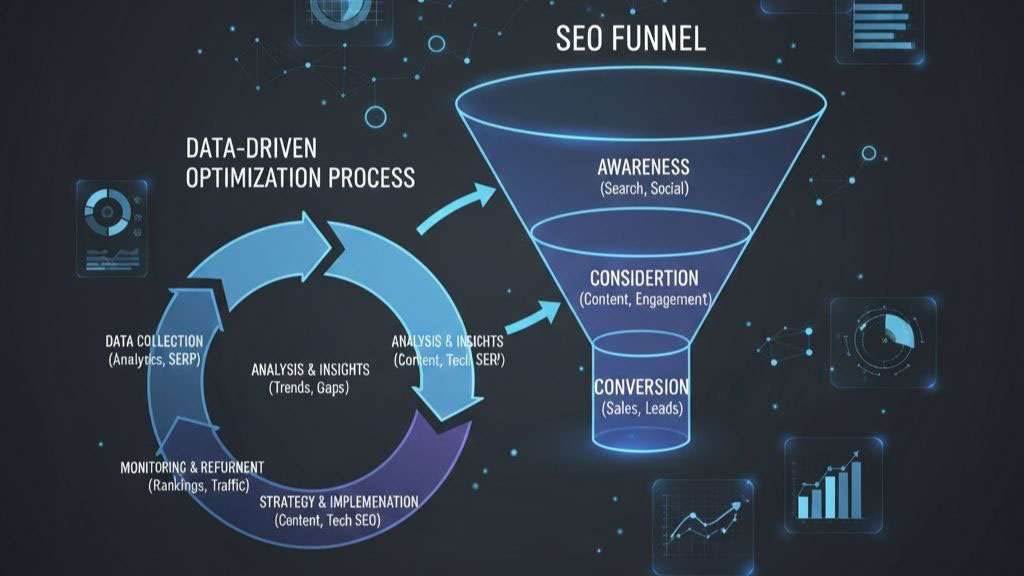
Data-Driven SEO Optimization
At the core of programmatic SEO is data-driven SEO optimization. Every decision should rely on data analysis:
- Keyword Data: Base your page structures on search volume and competition data. For example, target keywords where analytics show user interest but relatively low competition. Update pages if trends shift.
- Performance Metrics: Continuously check which programmatic pages drive traffic and which bounce quickly. If certain data combinations underperform, refine or remove them. Google’s Core Web Vitals (loading speed, interactivity) also matter — ensure your automated pages are fast and mobile-friendly.
- User Engagement: Use analytics to measure conversions from programmatic pages. Are visitors signing up or buying after landing on these pages? If not, tweak the content or calls-to-action (CTA). Remember: automated pages still need compelling UX to turn visitors into customers.
- A/B Testing: Even at scale, you can A/B test templates. For example, try different headline formats or layouts on a subset of pages and compare performance. This data can guide template optimization.
Data-driven optimization means your programmatic SEO is not a one-off project. It’s an ongoing process of using analytics to refine the templates, data, and on-page content. When balanced with manual oversight, this approach maximizes results without adding massive workload.
Indeed, one of the greatest advantages of programmatic SEO is that every page provides more data for analysis. As Neil Patel notes, tools like SurferSEO can “provide real-time keyword data to refine your strategy”. By leveraging these insights, you ensure that your automatically generated content actually aligns with what users search for.
Best Practices and Pitfalls
While powerful, programmatic SEO has pitfalls to avoid:
- Avoid Thin Content: Google penalizes low-value pages. Even if automated, each page must offer something unique. For instance, add location-specific tips on travel pages, or individual testimonials on product pages. Neil Patel warns that poor data and templated content can create “thin, low-value content” if not carefully managed. Always incorporate at least some unique text or media per page.
- Prevent Duplicate Content: Be cautious of near-duplicate copy. Use canonical tags if needed, and diversify your templates. For example, rotate sentence structures or use synonyms in generated descriptions. Follow Google’s advice to “create varied content that doesn’t differentiate enough”.
- Quality over Quantity: More pages is not always better if they add no value. Start with the most promising keywords and scale gradually. Monitor SEO performance closely. Neil suggests that programmatic SEO “isn’t for everyone—it works best for sites that can leverage structured data”. If your site has little data to differentiate pages, a huge automated rollout may backfire.
- Maintain Technical SEO: Ensure each page has proper meta titles, headers, alt text, and fast load times. Programmatic sites can generate many URLs; you must still ensure your sitemap is correct and you haven’t unintentionally blocked pages via robots.txt. Also, implement schema markup (e.g. Product, Local Business) to help search engines understand the content of each page.
- Regular Audits: Periodically audit your pages for SEO issues. Because programmatic pages are numerous, small errors can multiply. Use SEO audit tools to detect broken links, slow pages, or indexing problems. Implevista’s SEO services emphasize thorough technical audits to catch such issues early.
By following best practices — emphasizing high-quality data, unique content, and proper optimization — you harness the strengths of programmatic SEO while mitigating risks. When done right, it seamlessly integrates into your broader SEO strategy (including our full-service SEO offerings) to boost traffic and growth.
Integration with Overall SEO Strategy
Programmatic SEO should complement, not replace, your existing SEO efforts. Consider these integration points:
- Internal Linking: Use programmatic pages to reinforce site structure. For example, cluster related pages with strategic internal links (e.g., linking city-specific pages to a main category page). This helps both users and search engines navigate your content.
- Content Marketing: Tie templates into your content calendar. You might publish blog posts that link to programmatically generated pages, or use programmatic pages as landing pages for campaigns. Implevista’s content marketing services highlight cross-linking as a growth tactic.
- Local and On-Page SEO: If some pages target local queries, integrate with Local SEO tactics. Ensure Google My Business listings are set up if applicable, and NAP info is consistent. On each page, optimize meta tags and headings with the target keyword as we would on any manual page.
- Continuous Testing: Treat programmatic and manual pages as part of the same testing loop. A/B test headlines or CTAs across both. For instance, you might compare user engagement on an automated page vs. a hand-crafted one for the same keyword.
By weaving programmatic pages into your overall site and content plan, you achieve a unified strategy. Implevista’s holistic approach (combining SEO, content, and UX) ensures all channels support each other. The result is a cohesive user experience and stronger SEO footprint.
As an example of integration: imagine you run an e-commerce site. You use programmatic SEO to generate detailed category and product pages (like “Buy running shoes in Dhaka”). These pages include targeted descriptions and customer reviews. When a seasonal sale arrives, you update your data feed with new prices and promotions, and the pages automatically reflect the sale (thanks to their dynamic nature).
Meanwhile, you write a blog post on “Best Running Shoes for Summer” that links to these pages. This synergy of Scalable SEO strategies, automated page creation, and traditional content marketing drives both traffic and conversions, exactly the kind of outcomes Implevista’s strategies aim for.
Tools and Software Recommendations
Here are some practical tools to support your programmatic SEO efforts:
- CMS & Static Generators: WordPress (with plugins like WP All Import or ACF), Hugo, 11ty, or Next.js to build templated pages from data.
- AI Writers: GPT-4 or similar (for generating template text or meta descriptions). Use carefully to ensure accuracy.
- SEO Analysis: SurferSEO, Clearscope, or SEMrush for keyword research and on-page optimization insights.
- Analytics & Reporting: Google Analytics, Google Search Console, or dashboards (e.g., Data Studio) to monitor performance and Core Web Vitals.
- Data Tools: Excel/Google Sheets, MySQL, or API clients to manage and update your data sets.
- Automation Platforms: Zapier or Make.com (Integromat) can connect data sources to website endpoints if needed for real-time updates.
Choosing the right tools depends on your technical expertise and scale. For enterprise-scale projects, custom development is common. Smaller sites might use WordPress with import plugins. The key is ensuring data flow is reliable and pages remain SEO-optimized, fast, and crawlable.
Programmatic SEO unlocks a powerful way to expand your organic reach. By combining Automated Content Generation, large datasets, and smart templates, businesses can target countless specific search queries with minimal ongoing effort. As highlighted, when implemented thoughtfully, programmatic SEO is a Scalable SEO Strategy that drives real results, especially for data-rich websites.
However, it requires careful planning, high-quality data, and continuous oversight to ensure each automated page offers value and adheres to SEO best practices.
In summary, follow these key takeaways:
- Start with thorough keyword research and data collection.
- Use well-structured templates to create unique, optimized pages.
- Integrate programmatic pages into your broader SEO and marketing plan.
- Monitor performance, refine templates, and keep content fresh and relevant.
By harnessing programmatic SEO, you align your content strategy with user intent at scale, turning analytics and data into profitable traffic. For businesses looking to accelerate growth, this method can be transformative.
Ready to elevate your SEO game? Contact Implevista Digital today to discuss how we can implement advanced programmatic SEO and other scalable strategies for your business. Explore our Search Engine Optimization services to see how we enhance site visibility and traffic, or browse our latest digital marketing insights on the Implevista Digital blog.
Don’t miss out on the future of SEO – subscribe to our newsletter or read our related guide on Local SEO strategies to continue learning. Let Implevista’s experts help you deploy data-driven, automated SEO campaigns that drive sustained growth.

FAQ: Programmatic SEO
What is Programmatic SEO?
Programmatic SEO is a method of using automation and data to create many web pages at once, each optimized for specific keywords. It turns structured information (like databases) into targeted landing pages, enabling websites to rank for thousands of niche queries.
How does Programmatic SEO differ from traditional SEO?
Traditional SEO involves writing individual pages manually, focusing on one topic or keyword at a time. Programmatic SEO automates page creation with templates and data, allowing the generation of hundreds or thousands of pages. It is designed for scale and works best for sites with large datasets (e.g., ecommerce or travel).
What are the benefits of Programmatic SEO?
It saves time, increases keyword coverage, and leverages data for more relevant content. Programmatic SEO enables Automated Content Generation, reaching long-tail keywords at scale and driving substantial organic traffic growth.
Who should use Programmatic SEO?
Businesses with large, structured datasets benefit most. Examples include ecommerce stores (many products), travel sites (many destinations), real estate platforms (many locations), and directories. Any site that can map keywords to data fields (like city names or product specs) can leverage programmatic SEO.
How do I implement Programmatic SEO?
Key steps: (1) Perform keyword research on scalable queries, (2) Collect or prepare data for each variable (locations, products, etc.), (3) Build an SEO-friendly page template, (4) Use a tool or script to merge data into the template and create pages, (5) Review and optimize the content and technical aspects. Continuous monitoring and updates are essential.
What tools are used in Programmatic SEO?
Tools include CMS platforms (WordPress with import plugins), static site generators (Hugo, 11ty), and data tools (spreadsheets or databases). AI content tools (like GPT-4) can help write unique parts of pages. SEO tools (SurferSEO, Google Analytics) ensure optimization and track performance.
How does automated content generation work?
Automated content generation uses scripts and templates to fill in data fields across many pages. For example, a “meta” template might say, “Discover the best [product] in [city]” and the system would substitute each product name and city from a list, publishing each as a new page. Some sections may be generated by AI to add variety and human-like readability.
Is Programmatic SEO suitable for small businesses?
It depends on the scale. Small sites with limited product lines may not need or gain much from hundreds of pages. However, any business with a growing inventory or many service locations could benefit from automating page creation. For most small businesses, starting with targeted content and gradually adding some programmatic elements (like pages for each branch location) can be an effective strategy.
Can Programmatic SEO improve data-driven SEO optimization?
Yes. Programmatic SEO is inherently data-driven: it relies on analytics and user data to define page content. By analyzing which data-driven pages perform best, you can refine keywords and content. This approach helps ensure your SEO efforts are aligned with real user search patterns and site performance metrics.
What are the risks of Programmatic SEO?
Main risks include creating duplicate or thin content, which can hurt rankings. Without unique content per page, Google may penalize your site. Also, technical issues (like slow page loads or crawl errors) can be magnified across many pages. It’s crucial to implement quality control: use canonical tags if needed, add unique info to each page, and monitor Core Web Vitals and analytics to catch problems early.