

SEO for AI Search is transforming how we optimize websites. Today’s search engines – especially Google’s new Search Generative Experience (SGE) – use AI to generate direct answers rather than just lists of links. As a result, content that used to rank well can now be summarized and pushed down unless it meets new criteria. In practice, SEO for AI Search (also called Generative Engine Optimization or GEO) means designing content to be the answer in AI-driven results.
For example, HubSpot defines GEO as optimizing “content to be cited, referenced, and synthesized by AI engines” like ChatGPT, Perplexity or Google AI Overviews. Users now ask much longer, natural-language queries (averaging ~23 words), so pages must provide clear, complete responses.
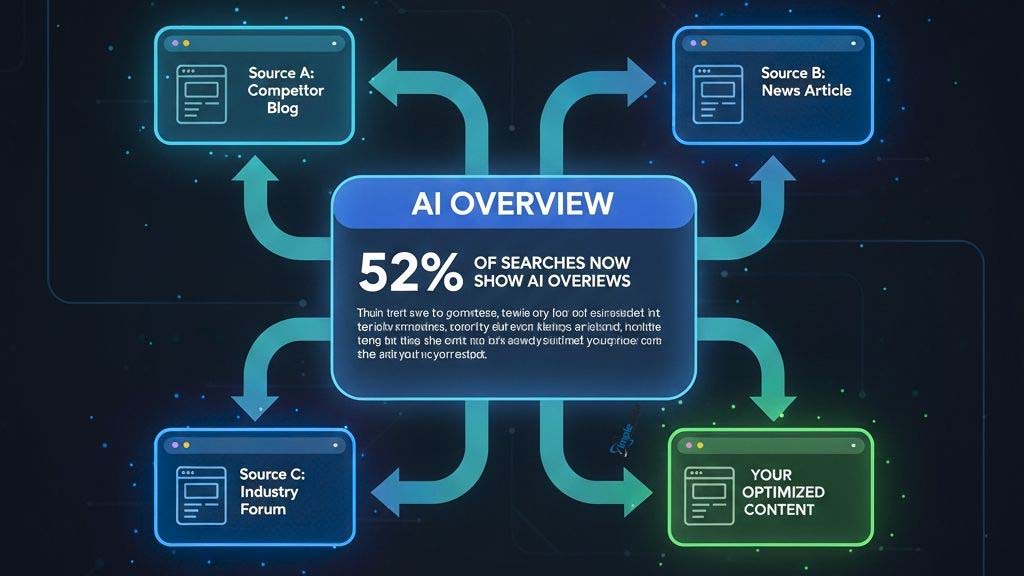
AI tools are already reshaping traffic patterns. Google reports over half of queries may show AI-generated summaries. Retailers are bracing for an explosion in AI referrals – one industry report predicts a 520% surge in chatbot-driven search traffic this year. In this new landscape, your site needs tactics beyond traditional SEO.
The 7 strategies below (backed by the latest industry research and Implevista expertise) will help your content succeed in the age of AI Search. Throughout, we’ll link to relevant Implevista resources – for instance, our SEO services page explains core SEO fundamentals, while our blog covers related topics like semantic SEO.
Understanding Google’s AI Overviews
When Google’s SGE or other AI tools answer a query, they often display an “AI Overview” – a concise summary of 6–10 sources spanning ~175 words. This means users get answers without clicking through. For example, Single Grain notes that AI Overviews “include a curated set of sources (6–10 links)” and synthesize them into a single response.
Implevista’s blog highlights how AI now personalizes and summarizes search results. In short, ranking on page 1 is no longer enough – you must be one of those cited answers.
Google’s official advice echoes this: focus on unique, high-value content that thoroughly answers longer, specific queries. Also ensure the page experience is excellent (fast load times, mobile-friendly, no clutter) and that AI bots can crawl your content. You’ll see these themes in the strategies below.
Strategy 1: Answer Questions with Clear, Structured Content
AI search favors content that directly answers the user’s question, and in a digestible format. Instead of meandering paragraphs, use concise answers, bullet lists, and Q&A sections. Wired reports that modern chatbots and AI engines “favor content presented in simple, structured formats, like bulleted lists and FAQ pages”. In practice:
- Answer first. Lead with the answer to the question, then elaborate. For example, use a heading like “What is Generative SEO?” (H2 or H3) and immediately follow it with a clear answer. Single Grain notes that successful AI-overview content uses “answer-first writing” to satisfy queries up front.
- Use lists and bullets. Break key points into numbered or bulleted lists. These formats are easily pulled into AI answers. Blue Compass SEO tips say lists “make it easy for Google to pull content from your page and display it in the same fashion” (e.g. in answer boxes). Implevista’s SEO guide also recommends bullet points to improve readability.
- Add FAQ/Q&A sections. Include frequently-asked questions on every page. AI queries are often posed as questions, so writing content as Q&A helps match search intent. Format them as headings (e.g. “How does SGE affect SEO?”) immediately followed by a concise answer. Structured FAQ schema (covered in Strategy 2) can further boost this.
- Be concise. Avoid fluff. Google’s SGE shows limited space, so content with too many words can get cut. The key is to deliver a precise solution. As Blue Compass advises, “clear and concise” content improves AI’s ability to index it.
This user-focused style – short paragraphs, direct answers, and logical lists – makes it more likely an AI overview will cite your content.

Strategy 2: Leverage Schema Markup and Structured Data
Use structured data (schema.org markup) and semantic HTML to make your content machine-readable. AI search engines rely on understanding your content structure. Implevista’s SEO services specialize in technical optimizations, and here schema is vital. Some tactics include:
- Apply relevant schema types. Mark up your FAQs with FAQPage schema, how-to steps with HowTo, products with Product schema, and multimedia with ImageObject or VideoObject. Single Grain notes that schema like FAQPage and HowTo helps your content be understood by AI Overviews. For example, an FAQ markup explicitly tells Google the question-answer pairs on your page.
- Match visible content. Google Search Central reminds us that structured data must reflect on-page content. If you mark up an answer in schema, make sure that exact answer appears visibly on the page. This ensures Google can trust the markup.
- Use semantic HTML (headings, lists). Even without formal schema, use headings (H1–H3) logically and lists for key items. Blue Compass emphasizes “Semantic SEO” by structuring headings and HTML elements, which “allows you to better communicate to Google what your page is about”. For instance, use one H1, then H2s/H3s in order to outline content sections.
- Link building with context. When citing sources or linking internally, use descriptive anchor text. This helps AI crawlers contextualize your content’s relevance.
By combining schema markup with good page structure, you give AI crawlers a clear blueprint of your content. This increases the chances your page is cited in SGE answer boxes.
Strategy 3: Focus on E‑E‑A‑T (Expertise, Experience, Authority, Trust)
High-quality, trustworthy content is critical in AI search. Google’s generative answers favor pages that demonstrate expertise and authority. For example, Blue Compass ranks establishing “Experience, Expertise, Authority, and Trustworthiness (E‑E‑A‑T)” as their top SGE tip. Likewise, industry analyses stress that AI algorithms prioritize content from credible sources.
To leverage E-E-A-T:
- Show expertise. Ensure content is written or reviewed by subject-matter experts. Highlight author bios or case studies when possible. (Implevista often features expert bios on service pages to build trust.)
- Cite reputable sources. Include links to authoritative sites (e.g. statistics, studies, well-known publications) to back up claims. AI engines look for verifiable info, and citations increase trust.
- Original analysis. Add unique insights or examples that aren’t found on competitor sites. Google’s blog reminds us that “unique, non-commodity content” is key for AI success. Simply rehashing obvious facts won’t stand out.
- Maintain consistency. Publish related content regularly on your topic niche. Over time this signals a consistent authority. Implevista’s content clusters (see Strategy 5) help reinforce topical experience.
Remember, E-E-A-T isn’t just for SEO – it’s equally vital for AI search. If your pages truly stand out as expert, AI overviews are more likely to trust and cite them.
Strategy 4: Strengthen Your Traditional SEO Foundation
Don’t abandon classic SEO: organic rank still matters. In fact, Single Grain’s study shows pages ranking in Google’s top positions have much higher chance to appear in AI Overviews. So keep these fundamentals strong:
- Keyword and intent research. Continue thorough keyword planning, focusing now on intent. Match content to long-tail question queries, not just broad terms. Use tools or AI to uncover what questions users ask (e.g. ChatGPT prompts, PAA research).
- High-quality content. Write comprehensive, well-structured content that fully answers user needs. Even if AI search is new, the basic rule remains: give users what they want. (See our SEO services page on crafting value-driven content.)
- Technical SEO & UX. Ensure your site is fast, mobile-friendly, and cleanly coded. Google explicitly states AI engines need to crawl and access your content just like traditional crawlers. Implevista’s SEO team emphasizes Core Web Vitals: fast load times and smooth UX are ranking factors. For example, compress images, use caching, and check for broken links.
- Backlinks and authority signals. Earn high-quality backlinks. This traditional signal still influences AI: Single Grain notes that “page authority” (including links) contributes to AI Overview selection. Partnerships, guest posts, or PR can help.
In short, think of AI-specific tactics as an overlay on a solid SEO base. If your site can’t rank or load well, AI optimizations won’t compensate.
Strategy 5: Build Topical Authority with Content Clusters
AI search rewards sites that demonstrate comprehensive coverage of a topic. One effective method is to use topic clusters: interlinking pillar pages and subpages around a common theme. Single Grain suggests that building content clusters improves AI visibility.
For example, if your site covers digital marketing, create a core page on “AI Search Optimization” and link to detailed articles on “Structured Data for SEO”, “Voice Search Optimization”, “AI Tools for Content Analysis”, etc. Each subpage should use relevant synonyms and related terms, a tactic known as semantic SEO. Implevista’s own guides on SEO employ this method – for instance, our SEO for SaaS article explains using semantic content (synonyms, context) to strengthen topic authority.
Benefits of clustering: It signals to AI that you’re an expert on the overall subject, and allows Google’s algorithms to index a network of related answers together. It also creates more internal linking opportunities, helping crawlers discover and evaluate all pages. In practice:
- Create one broad pillar page that introduces the main topic (e.g. “The Ultimate Guide to AI Search Strategies”).
- Write multiple cluster pages on subtopics (e.g. “Optimizing for Google SGE”, “Using Chatbots for Search”, “Measuring AI Search Performance”), and link them back to the pillar.
- Use natural language and topic-related keywords in all pieces, rather than forcing exact-match phrases. This aligns with modern SEO guidance that context matters as much as keywords.
Over time, a robust cluster shows AI engines you have depth on “AI Search” and makes it more likely some part of your site will be the chosen answer in an AI overview.
Strategy 6: Optimize for Conversational and Long-Tail Queries
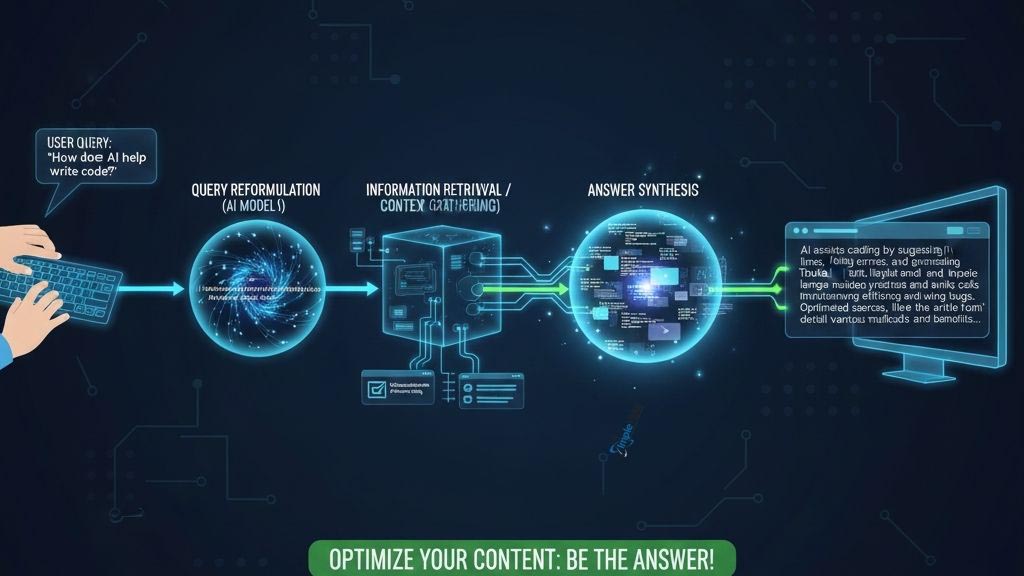
As users shift to AI search, they phrase queries like conversations. Your content should mirror that natural language. In practice:
- Embrace question-based headings. Many people type or speak full questions. For instance, format a section as “How do voice assistants change SEO?” and answer it clearly. Blue Compass notes that AI users “are most likely asking questions, so that’s how you should format your content”.
- Use long-tail and natural phrasing. Incorporate modifiers (e.g. “2025”, “best way”, “step by step”) and synonyms. Remember HubSpot’s finding: AI queries average 23 words vs. 4 in old Google searches. Try writing conversational sentences rather than choppy keyword lists.
- Incorporate voice search cues. Virtual assistants (Siri, Alexa, Google Assistant) drive many AI searches. Optimize for how people speak: include FAQs that begin with “Who”, “What”, “How”, etc., and ensure answers are spoken-flowing. (For example, an FAQ: “How to use Schema for SEO” with an answer starting “To use schema markup for SEO, first”.)
- Answer follow-up questions. AI engines often allow follow-up prompts. Anticipate these by expanding answers with details, examples, or related FAQs, rather than leaving threads hanging.
- Maintain topic relevance. Don’t stray – content should stay on-topic to the query. According to HubSpot, while keywords still matter, the way you answer is more important. In short, write for humans and natural flow, and search engines will follow.
Implevista’s marketing team uses conversational tone in blog posts for exactly this reason. By aligning your phrasing with how people ask questions, you improve chances of matching AI search queries.
Strategy 7: How to Update Your Content for Google SGE Results
Many of these strategies involve revisiting and updating your existing content to perform better in AI Search. Google’s algorithm and AI features change fast, so refreshing content is key. Here are steps to update content for SGE:
- Audit and refresh high-value pages. Identify your most popular or high-ranking pages (Google Analytics/Console can help). Update them with the latest information or data. Make sure the content directly answers current user questions. Google explicitly notes that users are asking longer, more specific questions now, so tailor your content accordingly.
- Add clear Q&A sections. If a page lacks FAQ or question headings, insert them. Write concise answers (1–3 sentences) immediately under each question. Use actual user questions from comments or forums. For example, an eCommerce product page could add FAQs like “What materials is this product made of?” and answer it. Each Q should be marked up with FAQ schema as per Strategy 2.
- Implement or update schema markup. For pages you refresh, ensure the structured data is current. If you added FAQs or new sections, include them in schema. Google emphasizes that structured data should be kept accurate and up-to-date.
- Improve page experience. Remove any obstacles (like intrusive pop-ups or paywalls) that might hinder crawlers or frustrate visitors. Optimize load speed by compressing images and cleaning unnecessary code – Blue Compass warns that slow pages might get skipped by crawlers.
- Enhance with multimedia. AI search increasingly supports images and video. If relevant, add helpful images or short videos (and mark them with schema). For instance, a tutorial can have a HowTo video.
- Check mobile readiness. Verify the updated page is mobile-friendly, as Google’s AI results appear on all devices. Responsive design and a good mobile UX are critical (they’re also part of Core Web Vitals).
- Measure and iterate. Use AI-aware SEO tools (like Share of Voice or AI Overviews tracking) to see if your updates lead to AI mentions. HubSpot mentions tools like an “AI Search Grader” to track generative SEO visibility. Regularly refine content based on what queries are driving AI results.
Following these steps – effectively a mini SEO audit focused on AI – will make your existing content more SGE-friendly. Think of it as tuning your site for a new search frontier.
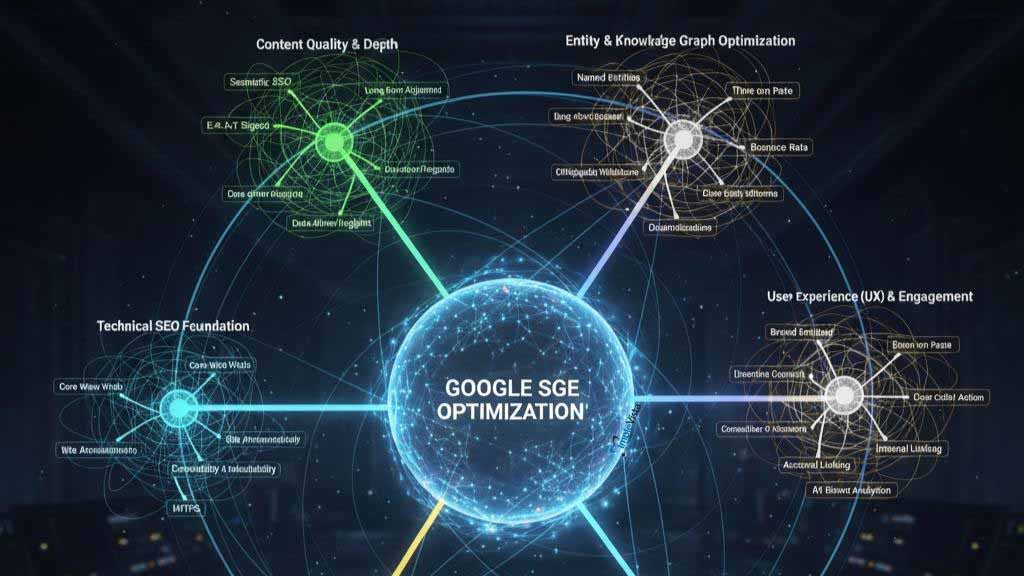
SEO for AI Search demands both innovation and strong SEO basics. By answering users directly, using schema, showcasing expertise, and continually refreshing content, you position your site to be the answer in AI-powered queries. These 7 strategies – from bullet lists and FAQs to topical clusters and technical optimizations – form a comprehensive playbook.
As Google’s own guidelines note, search (now with AI) always evolves. The good news: the same principles of helpful, user-first content still apply, just with new wrinkles. Follow best practices, monitor results, and adapt as AI search capabilities grow.
Ready to dominate AI search? Contact Implevista Digital today to learn how our SEO experts can tailor these strategies for your website. Whether you need a full SEO audit, AI-focused content creation, or ongoing optimization, we’re here to help. Or subscribe to our blog for more SEO and AI marketing insights. Let Implevista be your partner in emerging SEO trends – let’s ensure your content shines in every Google SGE answer box and beyond.
FAQs About SEO for AI Search
Q: What is SEO for AI Search and why does it matter?
A: SEO for AI Search (also known as Generative Engine Optimization, GEO) is about optimizing your content so it appears in AI-powered results (like Google’s SGE or chatbot answers). It matters because more people are getting information directly from AI summaries. If your content is structured and high-quality, it can be cited by these AI tools. In short, it helps ensure your site still gets visibility as search shifts to conversational, AI-driven answers.
Q: How does Google’s Search Generative Experience (SGE) change SEO strategy?
A: SGE changes SEO by prioritizing quick, concise answers over traditional rankings. Instead of just targeting keywords, you must target user questions directly. Google now summarizes content from top sources into an answer, so you need to structure pages with clear answers, bullets, and FAQs. Also, focus on content authority and freshness, since AI pulls from trusted, up-to-date info.
Q: What is Generative Engine Optimization (GEO)?
A: GEO is essentially SEO for AI. It means optimizing content to be included in generative AI answers. Instead of ranking in a list of links, GEO aims to get your content mentioned in the answer. For example, as HubSpot explains, GEO optimizes your page so it’s “cited, referenced, and synthesized by AI engines”. It involves clear answers, structured data, and updating content to fit AI search formats.
Q: How do I write content for Google SGE results?
A: Write conversationally and use question formats. Start with the answer, then elaborate. Use headings like “How do I optimize for SGE?” with the answer right below. Include bullet lists and FAQs that directly address queries. Keep content concise and to-the-point. Essentially, think like a chatbot: if a user asks this question, how would I answer in a short paragraph or list? Matching that style helps Google pick up your content in SGE.
Q: Should I focus on keywords or topics for AI Search SEO?
A: Focus on topics and user intent more than exact keywords. AI search understands context and related terms. Use keywords naturally, but prioritize covering a topic in depth (using synonyms and related concepts). Clustering related pages around a topic helps. In fact, Implevista’s content strategy advises “semantic SEO”: using meaning and context, not just exact-match terms. This helps AI see your content as authoritative on that subject.
Q: Do I still need traditional SEO tactics?
A: Yes – classic SEO is still the foundation. Good rankings and site performance boost your visibility in any search. SGE and AI overviews tend to feature already high-ranking pages. So keep title tags, meta descriptions, on-page SEO, fast page speed and mobile usability strong. AI search builds on SEO; it doesn’t replace it entirely. If your site isn’t indexed or loading well, AI optimizations won’t help much.
Q: How important is page experience (speed, mobile) for AI Search?
A: Very important. Google’s AI can only cite content it can crawl. Pages that are fast and mobile-friendly get indexed and used more often. Google’s guidelines explicitly say ensure a great page experience for both classic and AI search. So optimize images, reduce loading times, and ensure pages work on all devices to succeed in AI-driven search.
Q: Can multimedia help my content rank in AI overviews?
A: Yes. Google’s AI search is “multimodal,” meaning it can handle images and video with text. Adding relevant, high-quality images or videos (with proper VideoObject or ImageObject schema) can help your answer stand out. For example, a how-to guide with an embedded instructional video is more likely to be featured by AI. Just make sure any media is labeled and adds real value to the answer.
Q: How often should I update content for AI Search?
A: Regularly. The AI search landscape is evolving, and up-to-date content is favored. Refresh your key pages whenever new information, data, or user questions emerge. Google notes that evergreen, authoritative content tends to perform better in AI results. Monitoring metrics like search queries and AI mentions (using tools or Google Analytics) can tell you when an update is needed.
Q: What are some tools for AI Search optimization?
A: Several SEO tools now track AI presence (often under “AI Overviews” or “SGE” features). For example, HubSpot mentions an “AI Search Grader” to check your visibility in AI results. Others like SEMrush and Ahrefs are adding SGE tracking. Use these to see if your pages appear in AI answers and to identify which keywords are driving generative queries. Of course, general SEO tools (keyword planners, analytics, user behavior tools) remain useful to gauge your content’s performance.